Most people know that consistency wins on LinkedIn. Far fewer manage to stay consistent. You post three days in a row, a busy week hits, and the profile goes quiet for a month.
The problem is rarely a lack of ideas. It is the daily pressure of having to come up with something, write it, and publish it at a reasonable time.
Why consistency matters more than any single post
LinkedIn rewards accounts that show up regularly. Each post is a small reminder that you exist, and the effect builds over weeks. People who see your name often start to recognize it, and recognition is what turns a cold message into a warm one.
A single brilliant post cannot do that on its own. A steady stream of useful ones can.
The three reasons people stop posting
- No time. Writing a good post takes more time than most people expect.
- No plan. Deciding what to write each morning is tiring.
- No safety net. One bad week breaks the habit, and restarting feels harder every time.
Plan the week, not the day
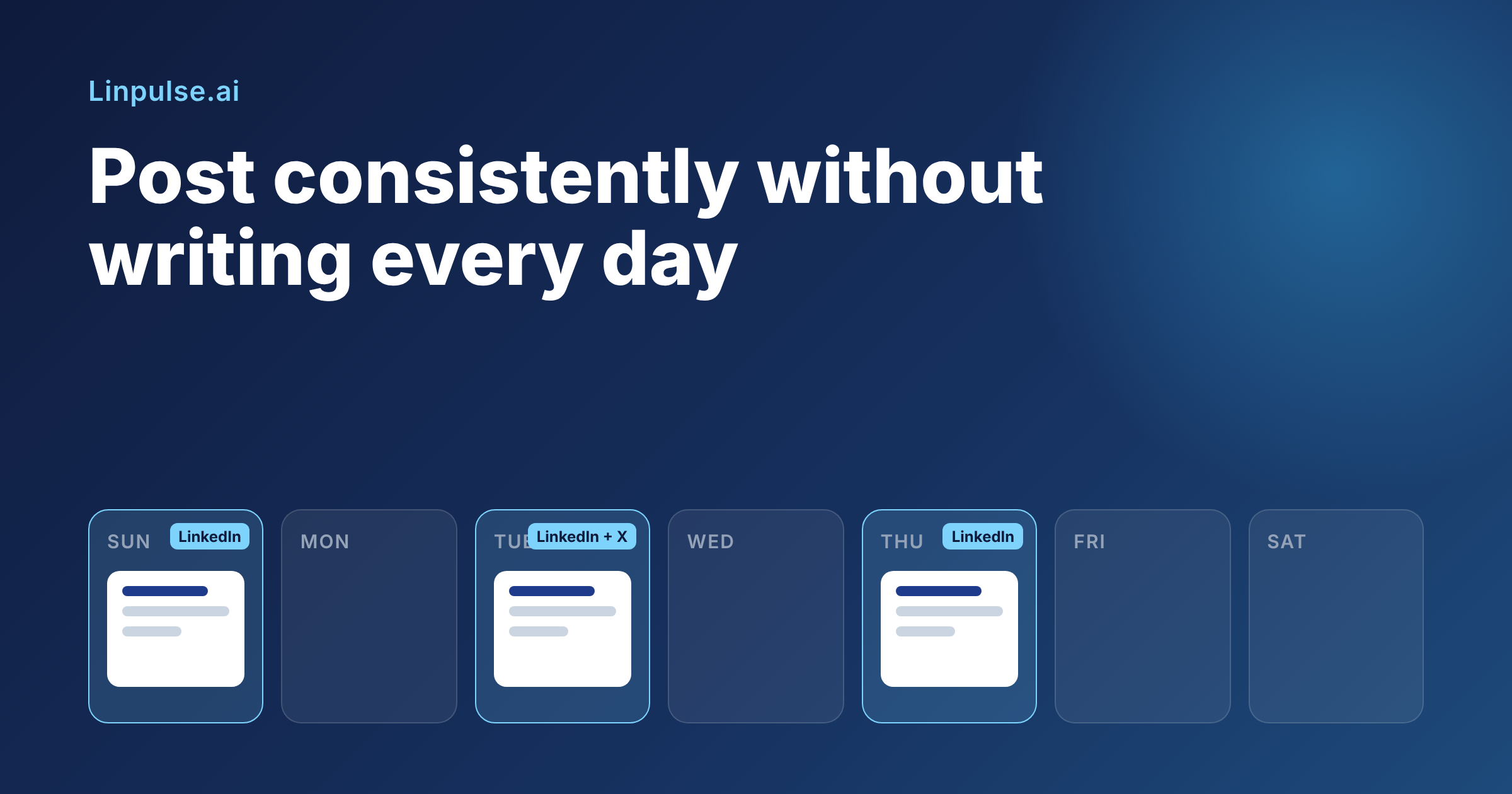
The fix is to move the decision out of the daily moment. Instead of asking "what do I post today?", decide once a week what your feed is about, which days you publish, and how many posts per day.
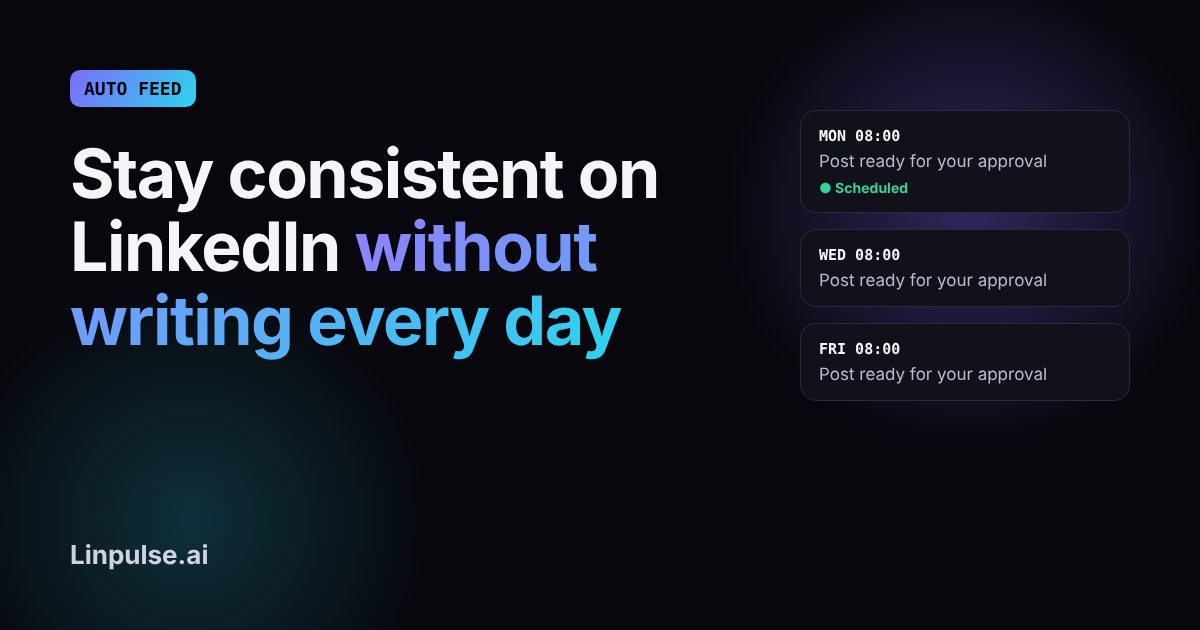
Then let the daily work shrink to a quick review: read, adjust if needed, approve.
A good feed mixes two kinds of posts
- Evergreen posts. Tips, lessons and stories that stay useful for months. They can be prepared ahead of time.
- News posts. Fresh updates from your field. They only work when they are recent, so they should be written close to the publishing time.
Mixing the two gives your audience both substance and relevance.
Keep a human in the loop
Automation should never mean losing control. The best setup lets you see every post before it goes out, edit it, replace it, change its time, or cancel it. If a post is not right, it does not get published.
Where Linpulse.ai Auto Feed fits
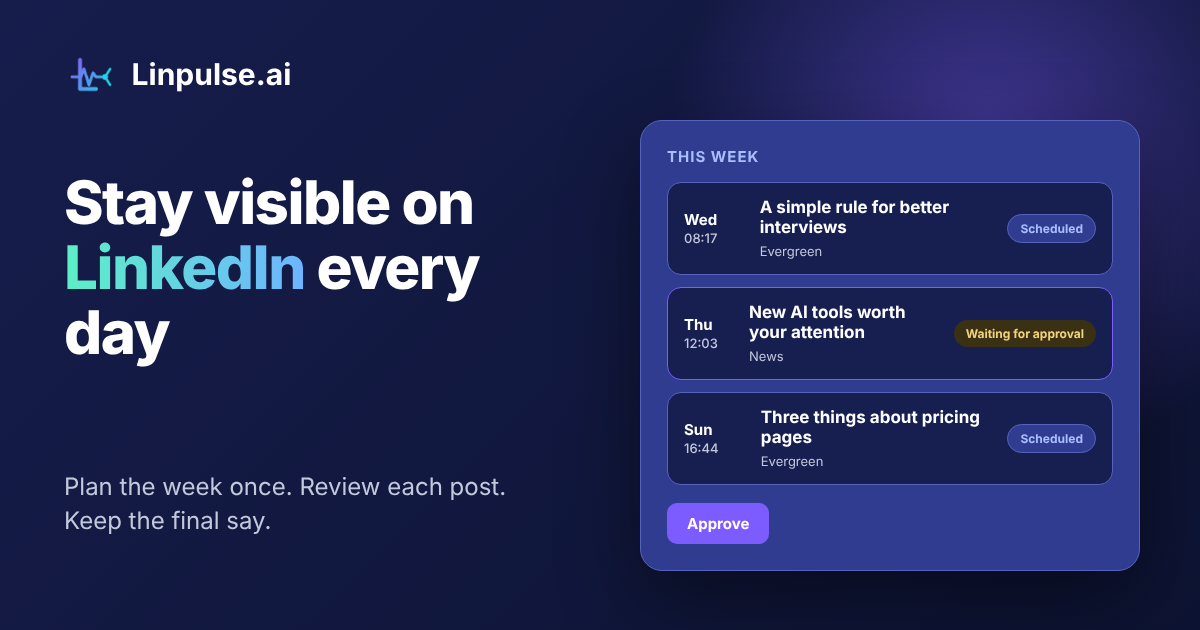
Linpulse.ai Auto Feed plans your LinkedIn week around the topics you choose. It prepares evergreen posts in advance, writes news posts shortly before their slot from fresh sources, and sends them to you for approval. You publish on the days you pick, and you can cancel or change any post until it goes out.
The goal is simple: a steady, credible presence on LinkedIn that takes minutes a day instead of hours.
The takeaway
Visibility on LinkedIn is a system problem, not a talent problem. Plan the week once, review quickly each day, and keep the final say. That is how you stay consistent long enough for it to matter.Most people know that consistency wins on LinkedIn. Far fewer manage to stay consistent. You post three days in a row, a busy week hits, and the profile goes quiet for a month.
The problem is rarely a lack of ideas. It is the daily pressure of having to come up with something, write it, and publish it at a reasonable time.
Why consistency matters more than any single post
LinkedIn rewards accounts that show up regularly. Each post is a small reminder that you exist, and the effect builds over weeks. People who see your name often start to recognize it, and recognition is what turns a cold message into a warm one.
A single brilliant post cannot do that on its own. A steady stream of useful ones can.
The three reasons people stop posting
- No time. Writing a good post takes more time than most people expect.
- No plan. Deciding what to write each morning is tiring.
- No safety net. One bad week breaks the habit, and restarting feels harder every time.
Plan the week, not the day
The fix is to move the decision out of the daily moment. Instead of asking "what do I post today?", decide once a week what your feed is about, which days you publish, and how many posts per day.
Then let the daily work shrink to a quick review: read, adjust if needed, approve.
A good feed mixes two kinds of posts
- Evergreen posts. Tips, lessons and stories that stay useful for months. They can be prepared ahead of time.
- News posts. Fresh updates from your field. They only work when they are recent, so they should be written close to the publishing time.
Mixing the two gives your audience both substance and relevance.
Keep a human in the loop
Automation should never mean losing control. The best setup lets you see every post before it goes out, edit it, replace it, change its time, or cancel it. If a post is not right, it does not get published.
Where Linpulse Auto Feed fits
Linpulse Auto Feed plans your LinkedIn week around the topics you choose. It prepares evergreen posts in advance, writes news posts shortly before their slot from fresh sources, and sends them to you for approval. You publish on the days you pick, and you can cancel or change any post until it goes out.
The goal is simple: a steady, credible presence on LinkedIn that takes minutes a day instead of hours.
The takeaway
Visibility on LinkedIn is a system problem, not a talent problem. Plan the week once, review quickly each day, and keep the final say. That is how you stay consistent long enough for it to matter.